What is Magic: The Gathering?
Magic: The Gathering is a card game where lands provide mana to cast creatures and other spells. In a typical two-player game, you try to reduce your opponent’s life from 20 to 0, although other ways to win and lose exist.
You need not learn every card first. This guide takes you from setup through resolved combat. Open and print your first-game sheet to keep the steps handy.
What you need before playing
- Two people, each with a deck prepared for the same kind of game.
- A life counter, paper or dice, and space for cards.
- For this exercise: casual 60-card decks with enough lands. Owning a collection is not the same as having a built deck.
- Agreement to play a learning game without requiring tournament-format legality.
Reading a card and paying its cost
Mana cost appears at the top right. Grizzly Bears costs {1}{G}: one mana of any type and one green. Two untapped Forests can pay it: tap each for one green mana.
Tapping means turning a card sideways. The land stays in play and untaps at the beginning of your next turn. Playing a land costs no mana and is normally allowed once per turn.
On a creature, 2/2 means 2 power and 2 toughness. Power determines combat damage dealt; toughness helps determine how much damage in one turn destroys it. It is not a life reserve gradually spent across turns.
Magic’s 5 Colours
| Colour | Basic land | A common play style |
|---|---|---|
| White | Plains | Supporting creatures and protection |
| Blue | Island | Card draw and answers |
| Black | Swamp | Sacrifices and graveyard use |
| Red | Mountain | Fast attacks and direct damage |
| Green | Forest | Large creatures and more mana |
These are guidelines, not limits: each colour has many strategies. Our example uses green and simple cards.
An opening hand and your first three turns
Teaching example, not guaranteed pack contents: four Forests, Llanowar Elves, Grizzly Bears and Giant Growth. We keep because it allows play from turn one. It is not a universal recommendation for every deck.
Turn 1: land and first creature
Play a Forest. Tap it to pay {G} and cast Llanowar Elves. The Elf just entered: it normally cannot attack or activate a tap-symbol ability until you have controlled it since the beginning of your next turn. This is summoning sickness.
Turn 2: untap, draw and develop
Untap your Forest, go through upkeep and draw. Play a second Forest and tap both to cast Grizzly Bears. The Bears cannot attack this turn. The Elf can now attack or tap for mana, but tapping leaves it unavailable to block next turn unless it untaps.
Turn 3: learning combat
Untap, draw and play another land if you have one. Suppose your opponent controls a 3/3 creature with no relevant abilities. Attack with the 2/2 Bears: they normally tap to attack. Your opponent decides whether to block; you do not choose their blockers.
If the 3/3 blocks, cast Giant Growth on your Bears after blockers are declared and before damage. Pay {G}; if nobody responds, the Bears are 5/5 until end of turn.
In combat damage, the Bears deal 5 to the blocker and take 3. The 3/3 is destroyed and the Bears survive. Your opponent takes no damage: the Bears were blocked and lack trample. During cleanup, marked damage is removed and +3/+3 ends.
Check your understanding: what if you do not cast Giant Growth?
The 2/2 Bears take 3 damage and are destroyed. The 3/3 blocker takes 2 and survives. This damage does not permanently reduce toughness and is removed during cleanup.
Turn order without skipping steps
| Stage | What you do |
|---|---|
| Beginning phase | Untap, upkeep and draw; remember the two-player first-turn exception |
| First main phase | Play a land and cast spells when allowed |
| Combat | Declare attackers, declare blockers and deal damage; there are response opportunities |
| Second main phase | Another spell opportunity; it does not itself grant a second land |
| Ending phase | End step and cleanup; normally discard to seven and remove marked damage |
When to play each card type
- Lands: normally during your main phase with an empty stack and priority. They are not spells.
- Creatures, sorceries, artifacts and enchantments: normally during your main phase with an empty stack and priority.
- Instants: when you have priority, including opponents’ turns. They do not interrupt a resolving card.
- Flash and other abilities: can change these permissions. Read the card text.
How much does starting Magic cost?
Learn with borrowed decks or try the MTG Arena tutorial. When buying physical cards, check whether the product includes a playable deck, lands and materials for one or two people.
At Deck Lab, the reference €5 pack contains 100 single-colour cards for building. The 30 lands cost €2 extra and the optional commander €1.50. It should not be presented as a complete ready-to-play deck for €5; adding all extras gives 131 cards and still requires selecting a suitable list. Shipping is separate.
To compare before buying, see what to choose on a small starting budget.
Moving to Commander
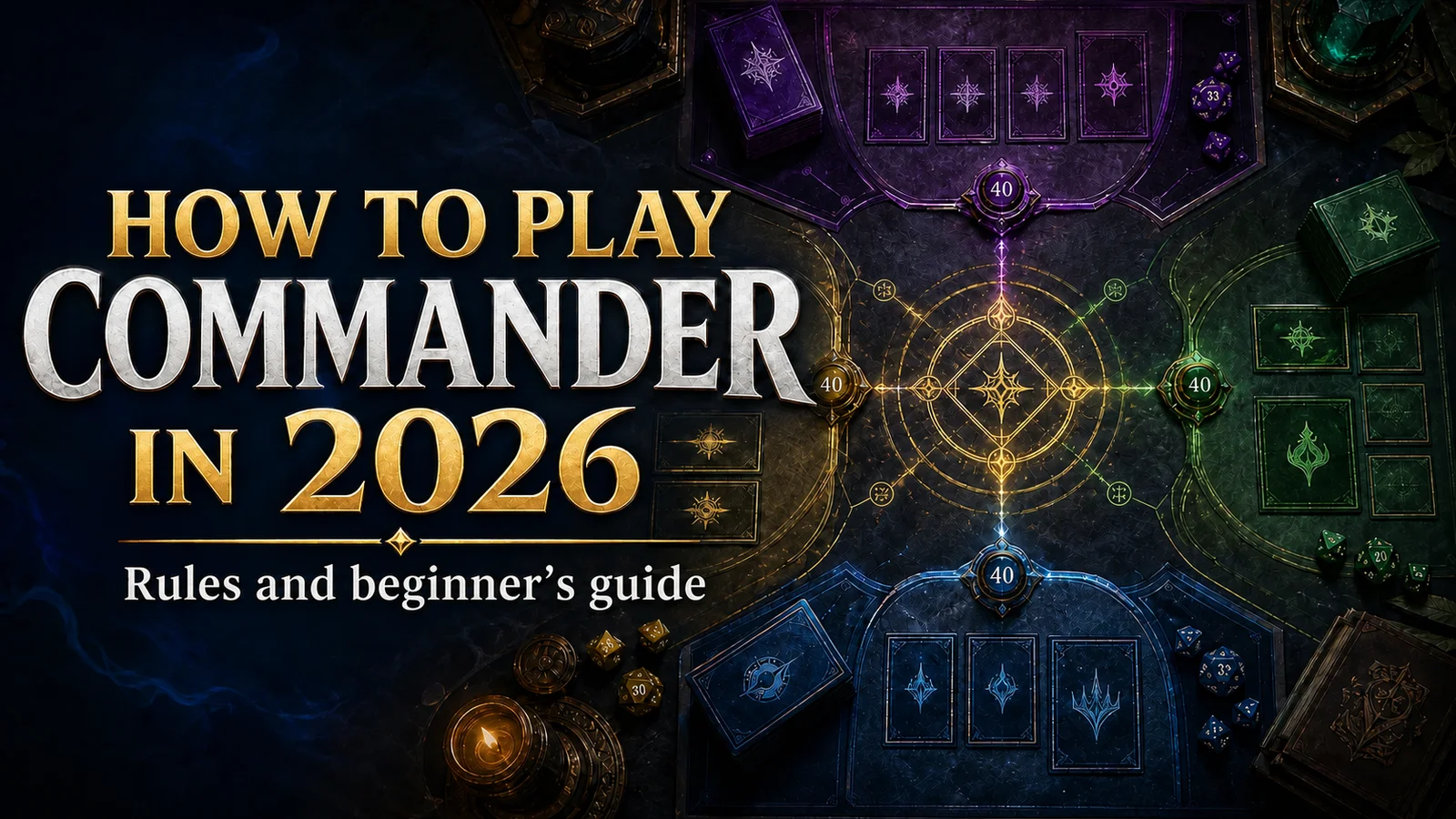
If friends play Commander, prepare that format together. It changes to 100 cards including commanders, normally 40 life and a four-person table; combining any 100 cards is not enough.
First read what Commander is and whether it suits you. If you know Magic, go to your first Commander game step by step.
What to practise next game
- Explain how you will pay for each spell before tapping lands.
- Remember which creatures have summoning sickness.
- Declare attackers and wait for opposing blockers.
- Distinguish marked damage from creature toughness.
- Ask before resolving an uncertain interaction.