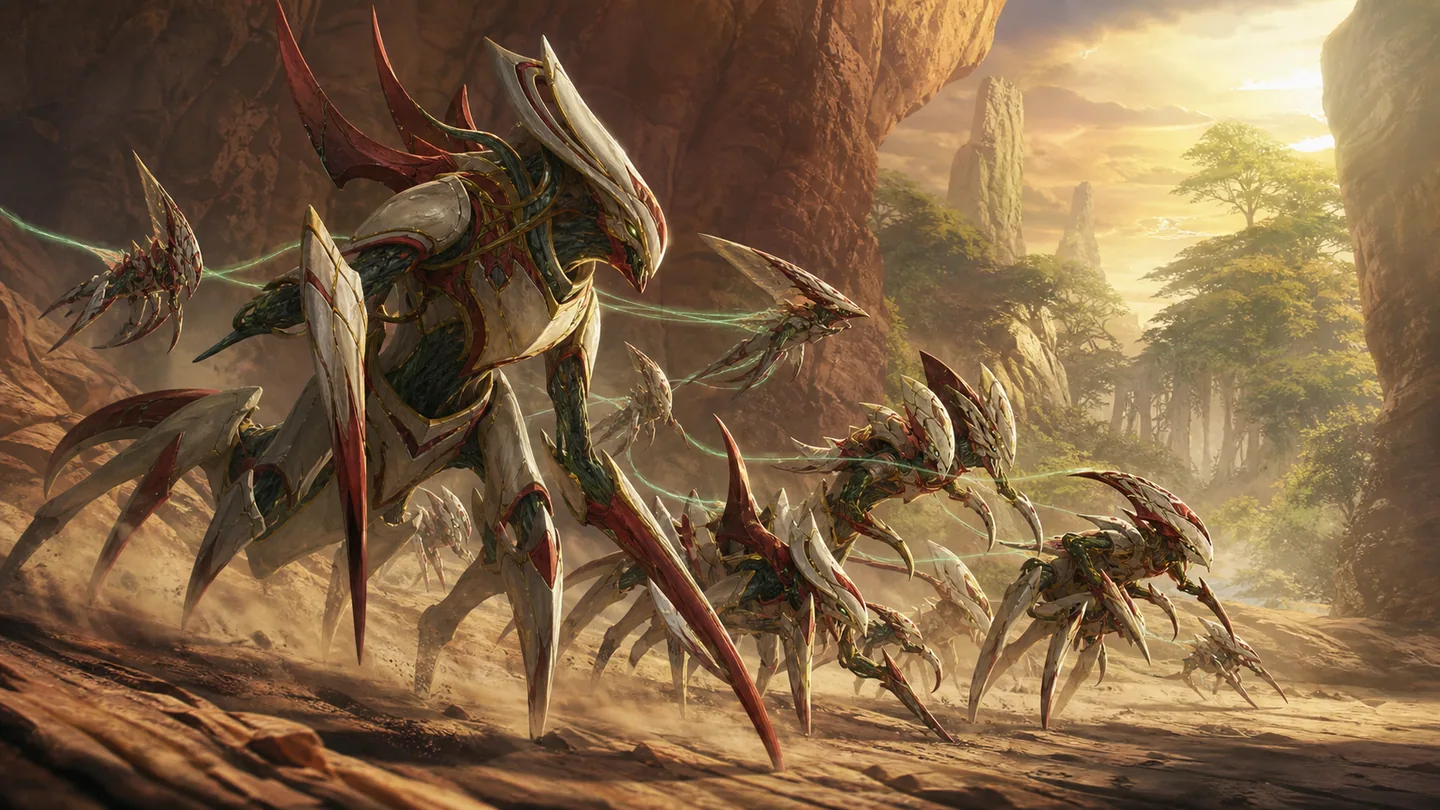

How the Atarka Dragon Commander deck works
Atarka, World Render leads a Gruul tribal strategy, meaning red and green. Green provides mana ramp and creatures that find lands; red offers Dragons, damage and interaction. Both colours share one aim: turning big creatures into combat pressure.
The commander costs seven mana and has flying and trample. Its most important ability gives your attacking Dragons double strike. Atarka does not have to do all the work: a Shivan Dragon, Territorial Hellkite or Hoard-Smelter Dragon already on the battlefield will also hit twice when you attack with the commander present.
This guide analyses the fixed Dragon Commander list with Atarka for €32. There you can review the 100 cards and reference price, and request a reservation on WhatsApp without paying at that point.
Turn-by-turn game plan
Early game: turns 1 to 3
The priority is increasing resources, not dealing small amounts of damage. Arbor Elf, Elvish Mystic, Llanowar Elves and Jaspera Sentinel let you get a turn ahead. Rampant Growth, Search for Tomorrow, Explore and Springbloom Druid help find lands and fix both colours.
You can also prepare a land with Fertile Ground, Gift of Paradise or Overgrowth. If you have several options, use the ramp that lets you make the most of next turn’s mana first. Avoid exposing three mana creatures if one creature and a land-search spell already let you stay on curve.
Mid game: turns 4 to 6
At this stage, turn mana into advantage. Dragonlord's Servant makes Dragons cheaper; Dragon's Hoard produces mana and can turn into cards; Garruk's Uprising rewards large creatures entering and helps threats without evasion get past blockers.
A mid-cost Dragon forces opponents to react before Atarka arrives. Rapacious Dragon leaves extra resources, Hoarding Dragon finds an artifact to retrieve when it dies, and Dragon Mage can refill an empty hand if it connects. You do not have to cast the most expensive creature: play the one that preserves a good sequence for next turn.
Late game: Atarka and the decisive attack
Before casting Atarka, count blockers, open mana and potential damage. If you already control two 4-power Dragons, double strike represents 16 damage before adding the commander. With evasion or trample, that board can eliminate an opponent or force immediate answers.
Attack whoever can dismantle your board or stop combat first. Haunted Cloak gives a creature haste, vigilance and trample; Fleetfeather Sandals can give haste and flying. These reduce the waiting time, but check that you have mana left to protect your plan or answer a decisive permanent.
The deck’s key cards and their roles
| Role | Cards in the list | What they provide |
|---|---|---|
| Early ramp | Llanowar Elves, Elvish Mystic, Arbor Elf, Rampant Growth | Bring important turns forward |
| Fixing and mid-game ramp | Springbloom Druid, Fertile Ground, Gift of Paradise, Overgrowth | Secure red and green and reach seven mana |
| Dragon synergy | Dragonlord's Servant, Dragon's Hoard, Sarkhan's Whelp | Reduce costs or turn each Dragon into resources and damage |
| Card draw | Harmonize, Hunter's Insight, Garruk's Uprising, Dragon Mage | Prevent running out of cards after ramping |
| Interaction | Dragon's Fire, Draconic Roar, Beast Within, Chaos Warp | Remove threats while staying on plan |
| Board reset | Chain Reaction | Resets boards that developed faster |
| Finishers | Atarka, World Render, Overrun, Fling | Multiply damage or turn a creature into the final points of reach |
Dragon's Hoard and Garruk's Uprising
These engines are particularly valuable because they support what the deck already wants to do. Dragon's Hoard helps cast spells and accumulates value as your Dragons enter. Garruk's Uprising improves combat and replaces cards when creatures with enough power arrive. When choosing between another threat and setting up an engine, the engine is usually better if the game will last a while.
Interaction is not a wasted turn
Beast Within and Chaos Warp answer permanents that damage spells cannot reach. Return to Nature covers artifacts, enchantments and certain graveyards. Holding an answer can matter more than adding a Dragon if another player is about to establish a combo or an insurmountable advantage.
What to look for in an opening hand
A good seven-card hand should let you explain your first three turns. Look for:
- Two or three lands with early access to green.
- A one- or two-mana ramp piece.
- Another source of development: extra ramp, a cost reducer or a draw engine.
- At most one or two expensive Dragons.
- Interaction if you know the table is fast.
Common mistakes when playing Dragons
Filling the board before a wipe
Dragons attract attention. If you already have enough pressure, keep another threat in hand. You can then rebuild after a wipe instead of starting from scratch.
Casting Atarka without preparing an attack
Paying seven mana and passing gives the entire table a full round to respond. Whenever possible, support Atarka with haste, an established board or an opponent with no open resources.
Confusing power with advantage
A 6/6 creature does not recover the cards spent reaching it. Harmonize, Hunter's Insight, Garruk's Uprising and Dragon Mage are part of the plan, not accessories. The deck needs to keep drawing to survive a four-player game.
Weaknesses and how to play around them
The main risk is the high curve. If several mana sources are removed or Atarka is answered repeatedly, commander tax can put it out of reach. Diversify ramp across lands, creatures, enchantments and artifacts so you do not lose everything to one kind of answer.
The second weakness is board wipes. You cannot avoid them all with this budget list, but you can force opponents to use one before revealing your final threat. The third is card draw: prioritise engines when your hand drops below four cards.
How to upgrade the deck without losing its identity
After several games, record whether you lose to mana problems, a lack of cards or missing protection. Do not simply add the most expensive Dragon. A sensible upgrade might replace a slow threat with two-mana ramp, protection or repeatable draw.
Our guide to upgrading a Commander deck explains how to make batches of 5 to 10 changes and measure results. If you know which pieces you need, search our Magic singles. To change commander, budget or bracket, request a custom Commander deck.
Is this budget Dragon Commander deck worth it?
It is a good entry point for players who enjoy big creatures, clear combat phases and understandable mana decisions. It is not competitive and does not aim to win in the first turns: it is designed for Bracket 2, social games and visible progression from small ramp creatures to a double-striking Dragon attack.
You can view the full list and reserve the Dragon deck. If you are not yet comfortable with the command zone, colour identity or commander damage, start with how to play Commander and check the rules on the official format page.