How Sliver mechanics work
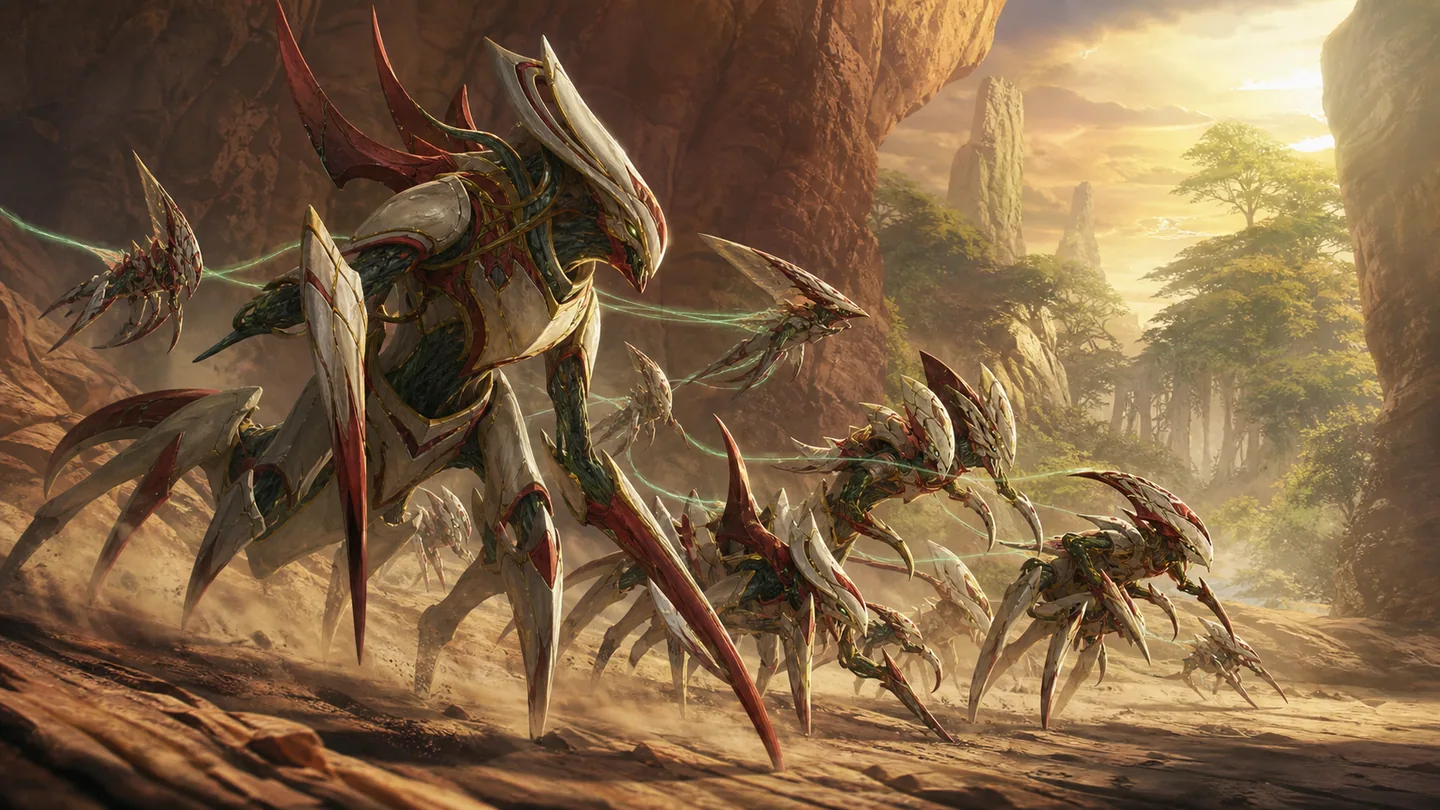
Most Slivers in this list grant an ability to the Slivers you control. The effect is not confined to one creature: it spreads across the board. Sinew Sliver increases power and toughness; Blade Sliver and Cleaving Sliver increase damage; Watcher Sliver improves toughness; Two-Headed Sliver makes blocking harder.
This structure has a strategic consequence: order matters. If you play Manaweft Sliver first, subsequent Slivers can help produce mana. If you expect to attack, vigilance or evasion may be worth more than another power increase. It is about building the right set of abilities for the table, not emptying your hand.
The list uses Gahiji, Honored One as commander for its Naya identity and rewards for attacking opponents. View the 100 cards and €40 reference price on the Sliver Commander deck page.
Sliver deck game plan
Early game: colours and the first ability
A three-colour deck needs fixing before accumulating creatures. Rampant Growth, Cultivate, Farseek, Sakura-Tribe Elder and Farhaven Elf help find the missing colour. Command Tower, Naya Panorama, Path of Ancestry and Unclaimed Territory complete the base.
Your first Sliver should improve the sequence. Manaweft Sliver turns the tribe into mana sources; Sidewinder Sliver makes favourable blocks harder; Sinew Sliver starts increasing the size of your whole board. With access to only two colours, prioritise the effect that helps find the third.
Mid game: combining abilities
Between turns four and six, seek two or three complementary abilities. Power without evasion allows small tokens to block; evasion without power takes too long to finish. Two-Headed Sliver, Predatory Sliver, Striking Sliver and Sentinel Sliver change combat, while Watcher Sliver or Plated Sliver help survival.
Lead the Stampede and Shamanic Revelation recover resources when you need to keep developing. Heraldic Banner and Icon of Ancestry provide mana or support the tribal plan. Gahiji enters best when several creatures are ready to attack: casting it onto an empty board misses its main purpose.
Late game: wide attacks and rebuilding
Megantic Sliver can turn a medium-sized board into an enormous threat. However, the more effects you accumulate, the more valuable an opposing wipe becomes. Attack when you can force favourable trades and keep at least one way to rebuild.
Rootborn Defenses can protect creatures from mass destruction that neither exiles nor reduces toughness. Do not spend it saving a minor piece if you suspect a wipe is coming. After losing your board, Lead the Stampede, Shamanic Revelation or Winding Way can help recover cards.
Key cards and the abilities they provide
| Role | Cards in the list | Board impact |
|---|---|---|
| Mana production | Manaweft Sliver, Commander’s Sphere, Naya signets | Chain creatures and fix colours |
| Power and toughness | Sinew Sliver, Blade Sliver, Cleaving Sliver, Watcher Sliver | Scale the whole tribe |
| Combat | Two-Headed Sliver, Striking Sliver, Sentinel Sliver | Improve blocks, first strike and defensive availability |
| Utility | Cautery Sliver, Poultice Sliver, Spinneret Sliver | Add reach, resilience or answers to specific situations |
| Draw and selection | Lead the Stampede, Shamanic Revelation, Winding Way | Refill your hand and find creatures |
| Interaction | Lightning Helix, Banishing Light, Nature’s Claim | Remove obstacles without relying on combat |
| Finishers | Gahiji, Megantic Sliver, Battle Sliver | Multiply a wide board’s damage |
How to sequence your Slivers
Imagine a hand with Sinew Sliver, Manaweft Sliver and Two-Headed Sliver. If mana is still limited, play Manaweft first: later creatures help pay for the rest of your hand. If you have resources but an opponent defends with tokens, Two-Headed may open a better attack. If the board is clear, Sinew increases the clock from the start.
The same reasoning applies after a wipe. Rebuild with mana or resilience before revealing the finisher. Abilities stack, but also disappear when the creature providing them dies.
Which opening hand to keep
Look for a hand containing:
- Three lands or two lands plus reliable ramp.
- Early green access to find the remaining colours.
- Two low- or mid-cost Slivers.
- Different abilities, not three versions of the same power increase.
- A draw source if your hand will empty quickly.
Common mistakes when playing Slivers
Playing your entire hand
Each new Sliver improves the previous ones, so deploying them all is tempting. Ask how much extra damage you actually need. If you already force the table to find an answer, keep two creatures for later.
Attacking without recalculating abilities
Power, toughness, first strike, vigilance and blocking restrictions can change every turn. Before attacking, review each creature’s contribution and what disappears if an opponent blocks or removes a particular piece.
Relying on Gahiji to function
Gahiji improves attacks but does not share tribal abilities. The deck must build its engine through the Slivers themselves. Cast the commander when it multiplies an existing board, not automatically on reaching five mana.
The deck’s weaknesses and answers
Wipes are the main problem because they remove creatures and abilities simultaneously. Rootborn Defenses helps against certain destruction effects, while tribal draw enables rebuilding. Effects that exile or reduce toughness require another approach: not committing every card.
The second weakness is three-colour mana. Prioritise green ramp and flexible sources. The third is dependence on pieces: if an opponent removes the Sliver providing evasion before blockers, an apparently favourable attack may no longer be good.
How to upgrade a budget Sliver Commander deck
Classify changes by role. If colours fail, improve the mana base first. If the board stalls, add evasion. If a wipe ends your game, seek protection and draw that work with few creatures. Do not replace ten cheap Slivers with ten expensive ones without solving the observed problem.
Follow our Commander upgrade guide and find specific pieces among our Magic singles. To expand to five colours or change commander, budget and bracket, request a custom Commander deck.
Who is this Sliver deck for?
It is ideal for anyone who enjoys visible synergies, many sequencing decisions and group attacks. Each game teaches the value of a different ability. It is not cEDH: the list is intended for social Bracket 2, with an affordable base and room to improve.
View the full list and reserve the Sliver deck. If you are still learning singleton construction, colour identity or the command zone, read how to play Commander in 2026 and use the official Commander rules as a reference.