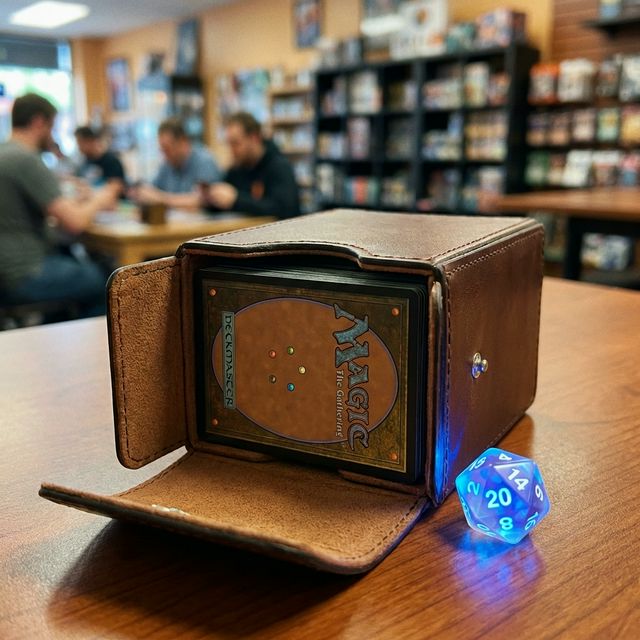
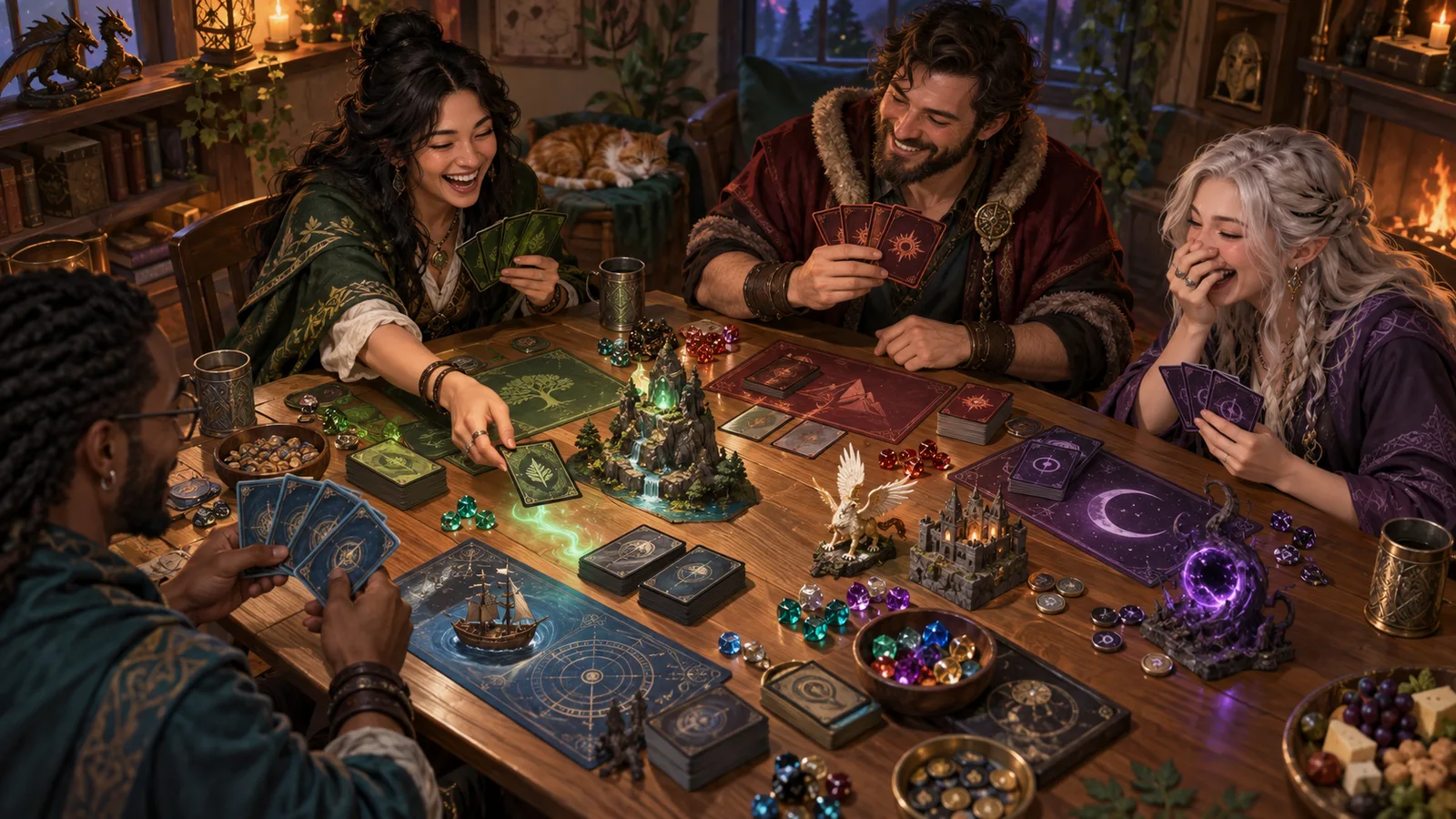
What makes a Commander deck fun?
“Fun” is neither a mechanic nor a power level. It may mean casting Dragons to one player, negotiating attacks to another, or winning with creatures that rarely see play. This is not a universal ranking; it is a set of starting points whose experience is easy to describe.
A good social deck usually has four qualities:
- Visible identity: the table quickly understands the story it is telling.
- Real decisions: it does not repeat one sequence or play solitaire.
- Proportionate interaction: it can answer threats without locking the game.
- A recognisable finish: it turns an advantage into an ending instead of empty turns.
Eight fun deck ideas at a glance
| Deck idea | Example commander | What happens at the table | Best if you enjoy |
|---|---|---|---|
| Cats and Dogs | Rin and Seri, Inseparable | The two types support each other and build a board | Collecting, creatures and a charming theme |
| Coin flips | Okaun + Zndrsplt | Every flip can reshape the turn | Bounded risk and memorable stories |
| Politics | Breena, the Demagogue | Rewards attacks and deals between opponents | Negotiating without giving away the game |
| Goad | Kardur, Doomscourge | Pushes opposing creatures into combat | Combat and breaking board stalls |
| Copies | Riku of Two Reflections | Repeats creatures or spells for extra resources | Improvising across many lines |
| Dice | Vrondiss, Rage of Ancients | Dice feed a damage-and-token plan | Randomness with a visible purpose |
| Walls | Arcades, the Strategist | Defenders draw cards and start attacking | Winning with unexpected cards |
| Spectacular typal deck | Atarka, Gishath or Slivers | A favourite creature type defines the list | Synergy, combat and huge turns |
The commander is only the shop window. Two decks led by the same legend can feel completely different depending on their tutors, combos, acceleration and finishers.
1. Cats and Dogs with Rin and Seri
Rin and Seri, Inseparable turns an immediately recognisable theme into a working engine. Casting one creature type helps produce tokens of the other, and the commander rewards the number of Cats and Dogs you control. The interesting part is balancing both families rather than including every creature with the right type.
Add board protection and several ways to recover cards after a sweeper. The common mistake is playing too many charming, expensive creatures and too little ramp or draw.
2. Coin flips with Okaun and Zndrsplt
Okaun, Eye of Chaos and Zndrsplt, Eye of Wisdom can share the command zone through partner. One turns won flips into a huge threat; the other helps turn the results into cards.
The randomness is bounded: you know what the deck is trying to do even when you do not know the exact size of its turn. Use clear counters, agree how coins will be flipped and keep each resolution quick.
3. Politics with Breena
Breena rewards players for attacking particular opponents and distributes value through cards and counters. The best deals offer visible choices: “if you attack there, we both advance; then we reassess the table”.
Build the deck so it still works when nobody accepts a deal. Political cards should improve already reasonable choices rather than hold the game hostage. Disclose sudden win conditions as well.
4. Forced combat with Kardur
Kardur, Doomscourge pushes your opponents' creatures to attack away from you for a round. It opens stalled boards and creates combat decisions without taking over anyone's turn. The deck can use more goad effects, rewards for creatures dying and threats that exploit open defences.
Do not fill every slot with attack incentives. You still need draw, answers and a finish. Retain cards that work once the game becomes one-on-one.
5. Copying with Riku
Riku of Two Reflections turns spare mana into copies. Duplicating a useful creature or decisive instant makes each hand a small puzzle, and the experience changes without relying on random cards from an opponent's deck.
A smooth list uses early ramp, medium-cost targets and cheap answers. Decide how it wins too: copying value for ten turns is not a replacement for a finisher.
6. Dice with Vrondiss
Vrondiss, Rage of Ancients connects dice rolls to damage on the commander and the creation of Dragon tokens. The list contains uncertainty, but its cards still move towards a creature board and a final combat.
Prioritise effects that remain useful on an average result. Poor rolls should create tension, not stop you playing.
7. Attacking with Walls through Arcades
Arcades, the Strategist changes how creatures with defender work: it helps draw cards as they enter and lets many turn toughness into pressure. Watching a wall-filled board switch from defence to attack tells a clear, surprising story.
Include protection and ways to function while the commander is unavailable. Do not rely on one card to enable every attack.
8. A creature type with one spectacular turn
Dragons with Atarka, Dinosaurs with Gishath and Slivers remain fun when the list focuses on their fantasy instead of pure optimisation. Their payoff is visible: accelerate, establish the creature type and prepare a combat that changes the game.
See our guides to Atarka Dragons, Gishath Dinosaurs and Slivers.
How to choose the right idea for your group
Ask these questions before building:
- Does the group enjoy randomness or prefer predictable decisions?
- Does it like negotiating during combat?
- How long do its games normally last?
- Which strategies does it not want to face again?
- Are you displaying a theme, matching a preconstructed deck or optimising?
Discuss extra turns, combos, tutors, mass land denial and Game Changers. Guidance can change, so check the official source before finalising a list.
Mistakes that make a fun idea exhausting
Confusing chaos with participation
Exchanging control of every permanent or rebuilding the game can erase decisions and extend the session. Use randomness that creates a consequence and lets play continue.
Depending entirely on the commander
An original theme stops working if removing one creature switches off the other 99 cards. Include several draw engines, protection effects and pieces that keep the plan moving.
Having no win condition
“Doing interesting things” for hours is not enough. Explain how the list ends: combat damage, tokens, commander damage or a disclosed synergy. A clear ending respects the table's time.
Optimising after every loss
If every thematic card is replaced by the most efficient option, the deck will eventually resemble every other list. Repair the structure before its identity. Our guide to upgrading a Commander deck uses packages of changes.
A short template for building the deck
Allocate room to lands, ramp, draw, interaction, protection, theme cards and win conditions. There is no universal number: the curve, colours and commander change the ratio. Use our 100-card Commander deck template and adjust it after real games.
Tell us the experience, budget, commander and bracket you want. We prepare a 100-card proposal that you can review before assembly.
Request a custom Commander deckReview the quote and request changes before approval.Reviewed 14 September 2026. Bracket descriptions were checked against the official Commander page; a final bracket depends on the complete list and its play intent.