

Riftbound in six steps
- 01
The goal: 8 points
Whoever reaches 8 points first wins. You get one point when you conquer a battlefield and another at the start of your turn for each field you continue to control. That is why defending a position is as valuable as taking it.
- 02
Your legend and its domains
The legend is your champion in command. It has two of the six domains in the game and you can only include cards from those two domains. It also provides a skill available for the entire game.
- 03
The runes are your resources
The runes go in a separate deck of 12 cards. Each turn you channel two and use them to pay for your cards. Since they don't mix into the main deck, you never run out of resources or draw extra resources.
- 04
Units, spells and equipment
Units enter your base and from there move to the battlefields. The spells have an immediate effect and the equipment remains on the table to reinforce your strategy.
- 05
Move and fight
When you take units to a field controlled by the opponent, there is combat: each side deals damage according to its power. If only your units remain, you conquer the field and score the point.
- 06
The last point
The point that wins the game is the most difficult: an isolated conquest is not enough. The normal thing is to close by maintaining a field at the beginning of your turn or conquering all the fields in the same turn.
What cards does a deck contain?
A Riftbound deck is not a single deck of cards: it is five pieces that are prepared separately.
| Letters | Piece | What is it for? |
|---|---|---|
| 1 | Legend | Your champion in command. Mark the two domains of the deck and provide an ability that you have from the first turn. |
| 1 | Chosen champion | A unit of the same champion as your legend. It starts outside the deck and you can play it when you have resources. |
| 40 | Main deck | Units, spells, and equipment from your legend's domains, with a maximum of 3 copies of each card. |
| 12 | Runes | Your resource deck, divided between the two domains. You channel two runes each turn. |
| 3 | Battlefields | The places that are fought over. They do not depend on the domain: they work with any legend. |
The six domains
Each legend belongs to two domains. Between the two they define the character of the deck.
Fury
Direct aggression: units that hit early and damage that closes games.
Calm
Defence and patience: protect your units and punish the attacker.
Mind
Spells, card draw and tricks to always stay one step ahead.
Body
Big units and more resources: win on size on the board.
Chaos
Movement, discard and risky plays that break the opponent's plan.
Order
Wide boards, clean answers and units that strengthen each other.
What legend to start with
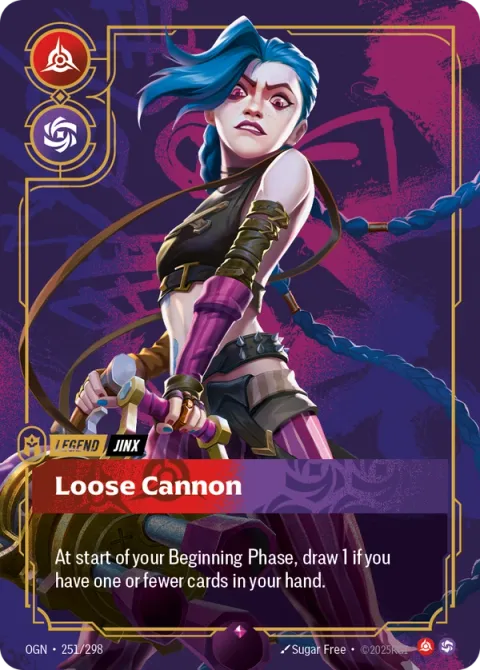
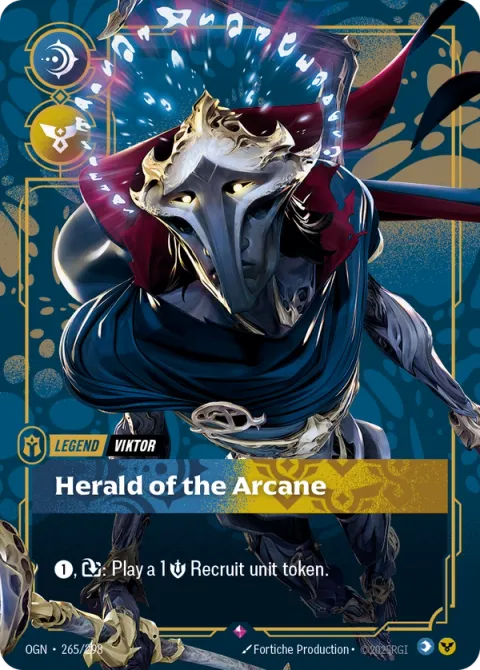
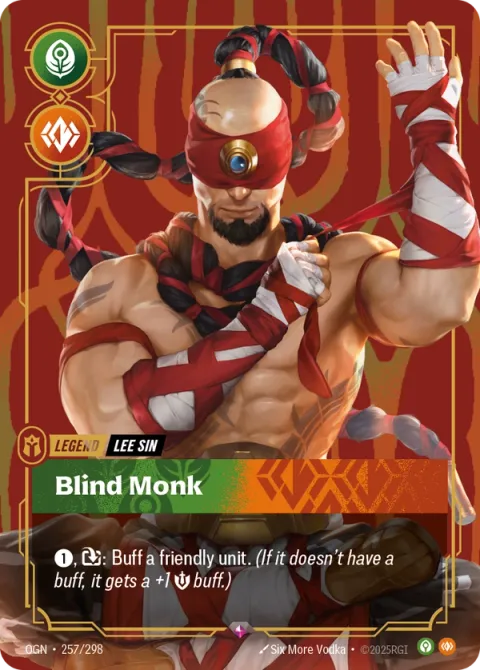
The three legends with their own champion deck are the easiest way to get started, and each one teaches a different style.
Frequently asked questions
What is Riftbound?
Riftbound is the League of Legends trading card game, created by Riot Games. Each player brings a deck led by a legend and competes to control battlefields until reaching 8 points.
How many cards are in a Riftbound deck?
A complete deck has 1 legend, 1 chosen champion, a 40-card main deck, a 12-rune deck and 3 battlefields.
How do you win a game of Riftbound?
The first player to reach 8 points wins. You score a point when you conquer a battlefield and another at the start of your turn for each battlefield you still control.
Which legend is best to start with?
Jinx, Viktor and Lee Sin have their own champion deck and cover three different styles: aggro, control and midrange. Lee Sin and Jinx are the simplest.