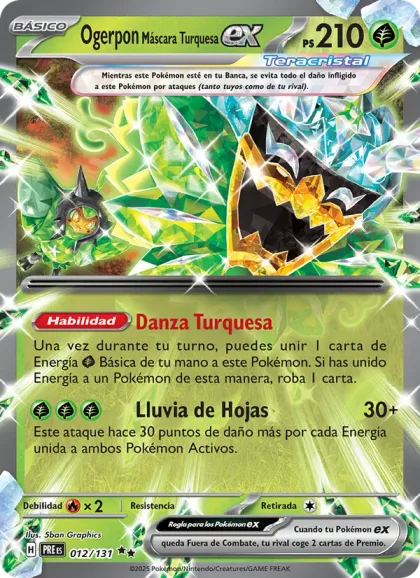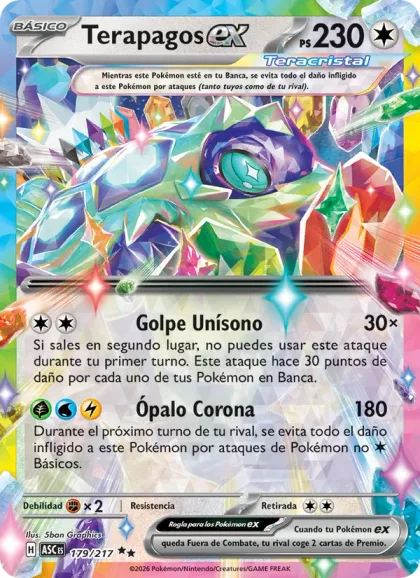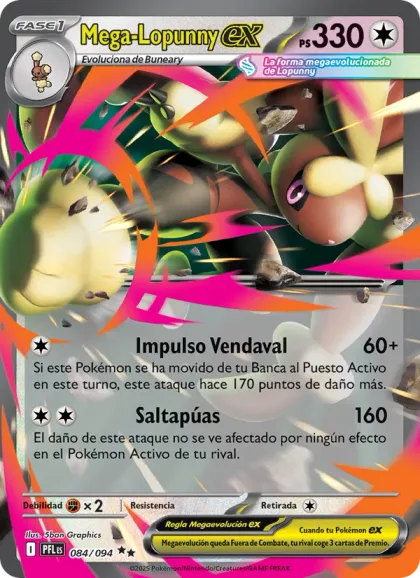
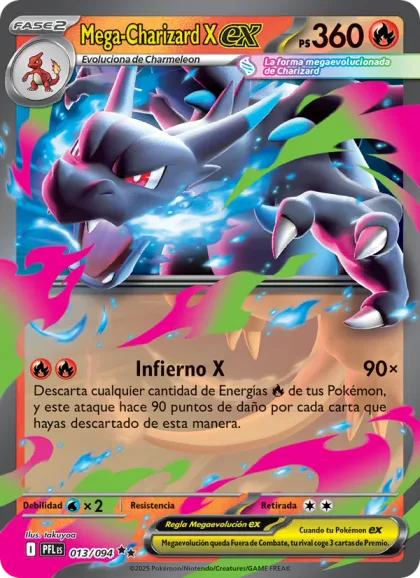
What already sounds familiar
The Pokémon TCG shares a good part of its structure with Magic: 60-card decks, a maximum of 4 copies of each card with the same name and a resource that you increase once per turn. And as in Magic, the Standard format rotates: in Pokémon it does so by regulation marks (H, I and J in October 2026) rather than by sets.
Energy is not mana
Magic's lands are tapped to pay; Pokémon Energy stays attached to the Pokémon and is not spent when attacking. You attach one per turn and each attack requires having attached what it asks for, not paying for it again. That is why Abilities that accelerate Energy are so important: the resource does not refresh every turn, it accumulates.
TipThink of Energy as a land that does not tap: every time you attack you still have it, but you also have to keep attaching more.
You win by Prize cards
There are no player life points. Each player sets aside 6 Prize cards and takes one every time they Knock Out an opposing Pokémon (2 if it is an ex and 3 if it is a Mega Evolution ex). Whoever takes them all wins. It is the biggest difference: here what matters is who wins the trades, not who brings life points down to zero.
Your creatures are also your life
Your Pokémon are both your creatures and your "health": if the Active Pokémon falls, you have to replace it with one from the Bench (up to 5 Pokémon) and if you have none, you lose. That is why having a good Bench matters as much as having a good attacker.
Trainers are your spells
| In Magic | In Pokémon | Limit |
|---|---|---|
| Instants and sorceries | Items | No limit per turn |
| Equipment and Auras | Tools | Attach to a Pokémon |
| Important sorceries (draw and search) | Supporters | Only one per turn |
| Global enchantments | Stadiums | One Stadium in play |
The Pokémon turn, step by step
You draw a card and then take your actions in any order you like, with limits per turn:
| Action | How many times per turn |
|---|---|
| Attach one Energy from your hand to a Pokémon | One |
| Play a Supporter | One |
| Play a Stadium | One |
| Retreat the Active Pokémon | One |
| Play Items and Tools | As many as you like |
| Evolve Pokémon | As many as you can, except those just played |
Attacking ends the turn, so you have to have done everything else first. And a Pokémon can't evolve on the turn it enters play or on each player's first turn.
What doesn't exist here
- There is no stack and no responses. You can't respond to an opponent's card with an instant: what each player plays resolves and that's it. Control is achieved with Pokémon that block damage or with effects on your own turn.
- There is no hand limit. You can end the turn with as many cards as you want.
- There is no combat phase with several attackers. Only the Active Pokémon attacks, once per turn.
Three ways to win
In Magic you reduce your opponent's life to zero. In Pokémon there are three ways to win, and it is worth knowing all three:
- Take your 6 Prize cards.
- Leave your opponent with no Pokémon in play, when their Active Pokémon falls and they have no Bench.
- Your opponent can't draw at the start of their turn, because they have run out of cards in the deck.
Decks that resemble the ones you already know
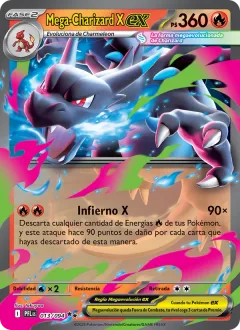
- Aggressive red (aggro, burn): Mega Charizard X ex, Mega Lopunny ex, Raging Bolt ex.
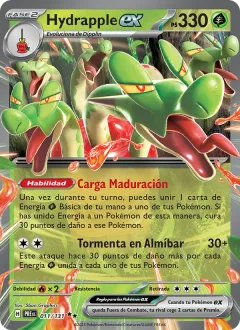
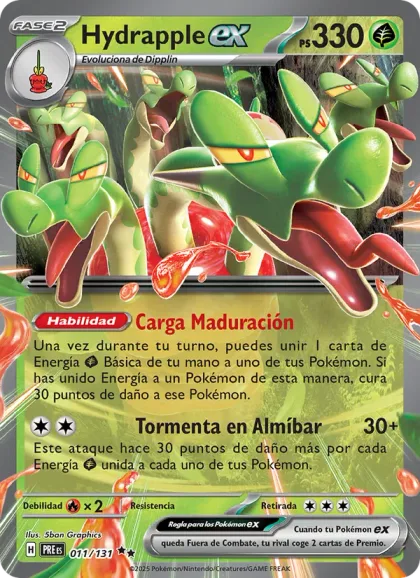
- Green ramp and huge creatures: Hydrapple ex, Mega Venusaur ex.
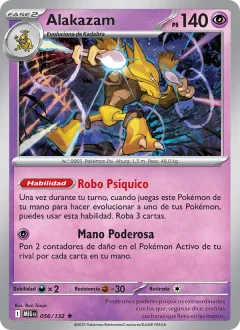
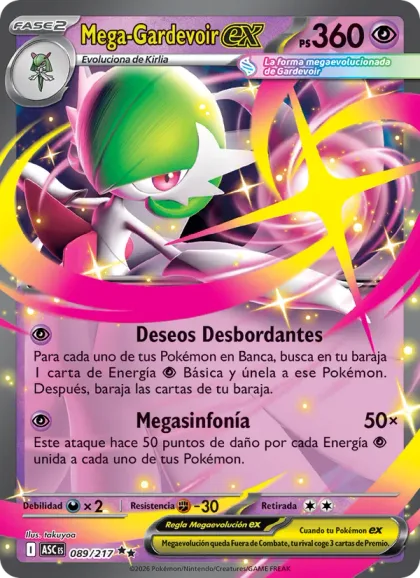
- Combo and card draw: Alakazam, N's Zoroark ex, Dipplin.
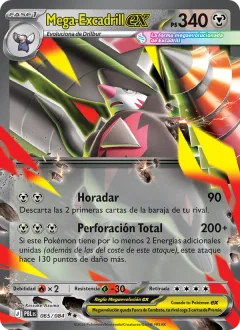
- Mill and discard: Mega Excadrill ex, Mega Absol ex.
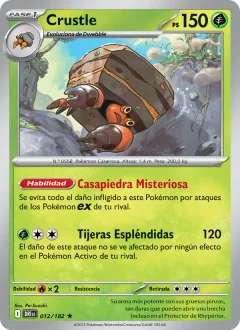
- Control and walls: Crustle, Terapagos ex.
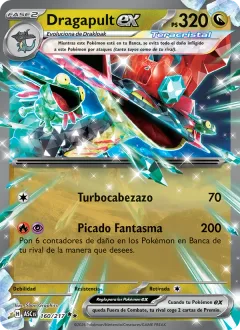
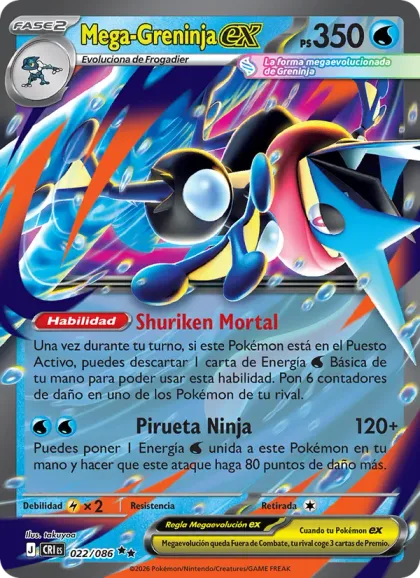
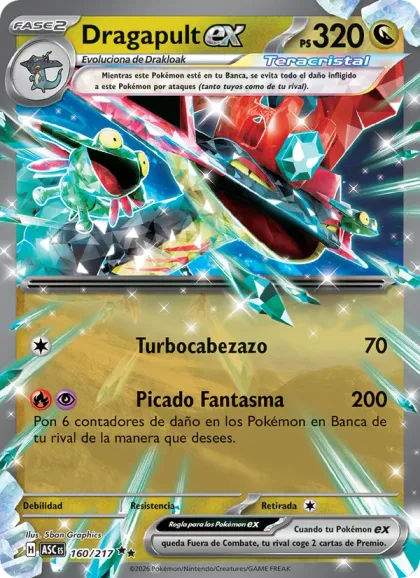
- Direct damage to several targets: Dragapult ex, Mega Greninja ex.