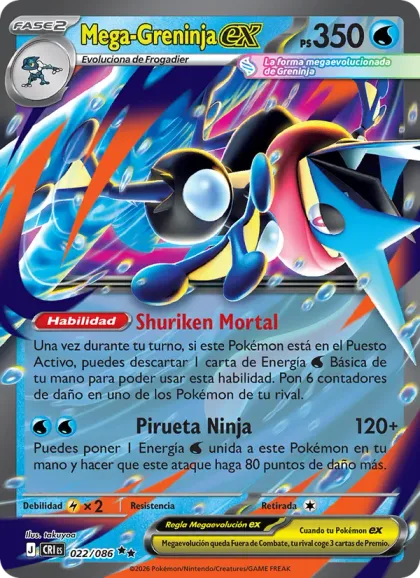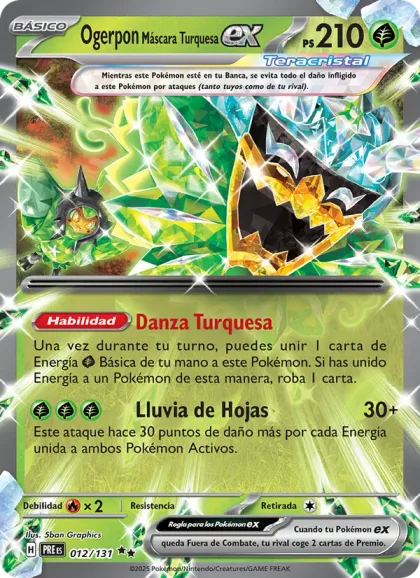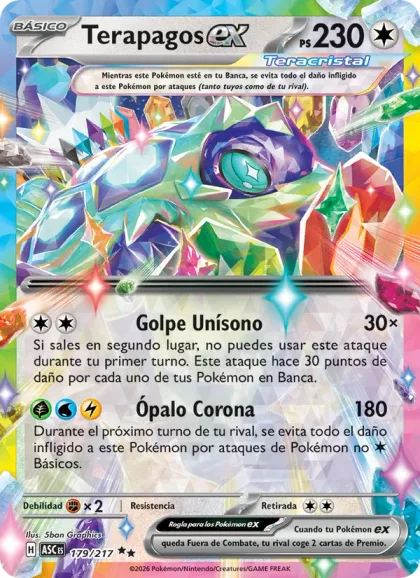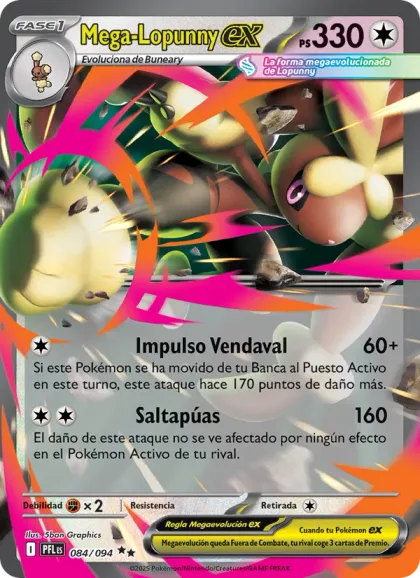
Choose your archetype
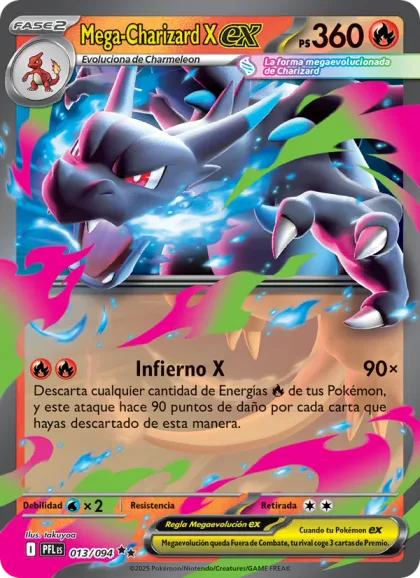
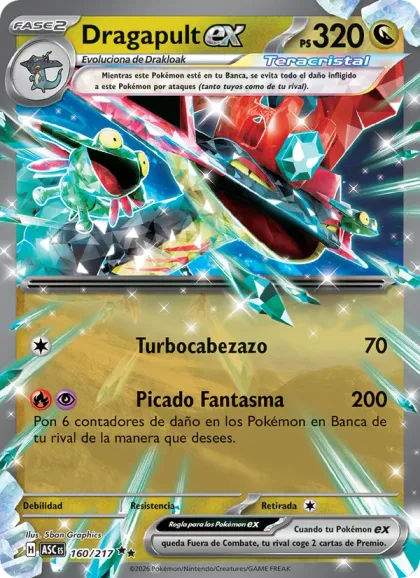
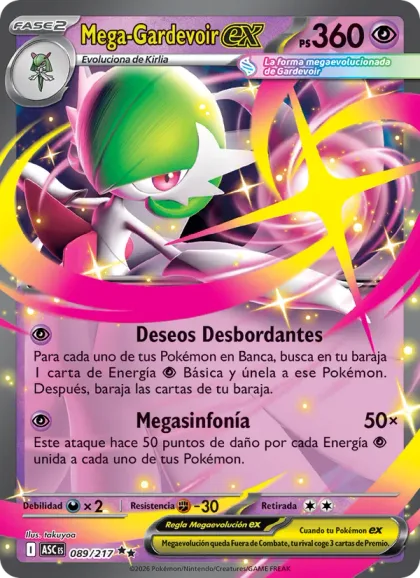
Everything starts here. The archetype is the idea behind the deck: which Pokémon attacks and how it wins. Before looking at cards, decide how you want to play: fast, spreading damage or with a combo. In the list of archetypes you can filter by type and difficulty.
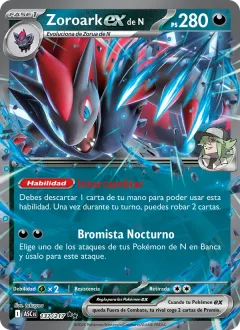
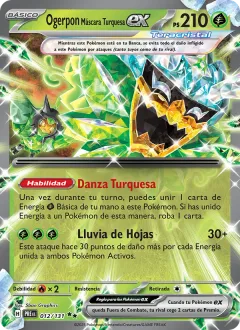
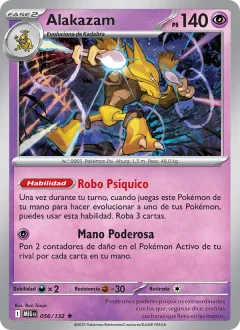
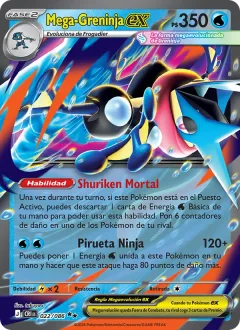
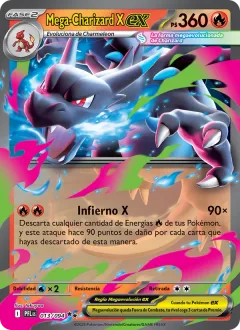
Build the main line
An archetype is built around a line of Pokémon: the Basic, its evolution and the final attacker. Include between 3 and 4 copies of the Basic Pokémon and the intermediate evolutions: without them, you do not reach the attacker. Basic Pokémon archetypes, such as Teal Mask Ogerpon ex and Terapagos ex, skip this step.
Split the 60 cards
There is no mandatory ratio, but as a starting point this works well:
| Card type | Suggested amount | What for |
|---|---|---|
| Pokémon | 12 a 20 | The main line and the support Pokémon |
| Trainer | 28 a 36 | Drawing, searching for Pokémon and keeping the plan going |
| Energy | 6 a 14 | Paying for attacks |
Adjust it to the archetype: a deck that accelerates Energy with an Ability includes less Energy, and one that attacks with a lot includes more. What does not change is consistency: you need to be able to play your Basic Pokémon from the first turn.
TipCount how many Basic Pokémon you run. If there are fewer than eight, it is easy to start with none in your opening hand.
Respect the deck-building rules
- Size: the deck has exactly 60 cards.
- Copies: a maximum of 4 copies of each card with the same name. Basic Energy has no limit.
- ACE SPEC: only one ACE SPEC card in the whole deck.
- Basic Pokémon: at least one, so you can start the game.
- Format: in Standard only cards with the current regulation marks are allowed (H, I and J in October 2026).
Choose your Trainers
Trainers are the engine of the deck. There are four kinds: Items, which you can play as many of as you like; Tools, which attach to a Pokémon; Supporters, of which you can only play one per turn; and Stadiums, which affect both players. Start with the ones that draw and search for cards: they are what makes the deck work every game.
Decide the Energy
Count how much Energy your attacks ask for and of which type. If your attacker uses two Energy of the same type, you need plenty of that type to attach it in time. If the deck has two types, split them according to which is needed sooner.
Test and adjust
Play several games before changing anything. Then check which cards stay in your hand unplayed and which ones you miss. Change a few cards at a time so you know what works.
TipNote down in each game which card was stuck in your hand. The third time it is the same one, change it.
How many Basic Pokémon you really need
If you start without a Basic Pokémon in your hand, you must show it, shuffle it and draw another (a *mulligan*), and your opponent may draw an extra card each time. The numbers explain why decks carry quite a few Basics even when their attacker is a Stage 2:
| Basic Pokémon in the deck | Probability of having none in the 7 starting cards |
|---|---|
| 6 | 46 % |
| 8 | 35 % |
| 10 | 26 % |
| 12 | 19 % |
| 14 | 14 % |
These figures are for a 60-card deck. With 12 Basics you miss one opening in five, and with 6 almost half. Count as Basics those in the main line, the support ones and the attackers that don't evolve, and don't go below 10 unless you have a clear reason.
Prize cards: what stays out of your hand
At the start you set aside 6 cards from the deck as Prize cards and you don't see them until you take them. Any card can be among them: a single copy has a 10 % chance of being set aside (6 out of 60). If your plan needs a specific Pokémon and you only play one, you are gambling. With four copies it is practically impossible for all of them to end up in the Prizes. The practical rule: the pieces you can't win without go in 3 or 4 copies, and single copies are kept for one-off effects, such as the ACE SPEC, of which you can play only one.
How many copies of each piece to play
Having a card in hand grows with the number of copies, but less than it seems:
| Copies in the deck | Seeing it in the 7 starting cards | Seeing it after three draws (10 cards seen) |
|---|---|---|
| 1 | 12 % | 17 % |
| 2 | 22 % | 31 % |
| 3 | 32 % | 43 % |
| 4 | 40 % | 53 % |
No number of copies guarantees anything. What gives consistency is adding cards that search (the ones that bring the Pokémon you are missing) and cards that draw. A key piece with 4 copies and two ways to search for it almost always shows up in time.
A list in four layers
Before filling in with your favourite cards, count the deck by layers:
- Engine: the line of Pokémon that attacks (Basic, evolution and attacker). It is what you chose with the archetype.
- Search: cards that bring specific Pokémon or Energy to your hand. If your line is a Stage 2, you need several.
- Draw: Supporters and Abilities that refresh your hand. You only play one Supporter per turn, so the quality of the few you play matters.
- Resources and outs: Energy, the cards that recover what you have discarded and the one that gets you out of a bad situation, such as switching your Active Pokémon.
How to test your list before playing
Before changing anything, repeat this test ten times: shuffle, draw seven cards and note three things. Is there a Basic Pokémon? Is there something to draw or search with? Could you have an attacker in play on your second turn? After ten tests you can see the pattern: if the third answer is “no” four times or more, it lacks consistency, and it is almost always fixed with one more copy of the line or of the support Pokémon, not with a new card.
Common mistakes
- Too many one-offs. A single copy of each card makes the deck do something different every game.
- Too little card draw. Without Items and Supporters that draw, you run out of resources mid-game.
- An evolution line with no support. If you lose the Basic, the plan falls apart.
- Badly split Energy. Having the attack ready but not the type of Energy it asks for.